When: 2025 till now Where: Vienna (AUT) Client: Alte Post / Hasso Plattner Stiftung Agency: Atelier SHA
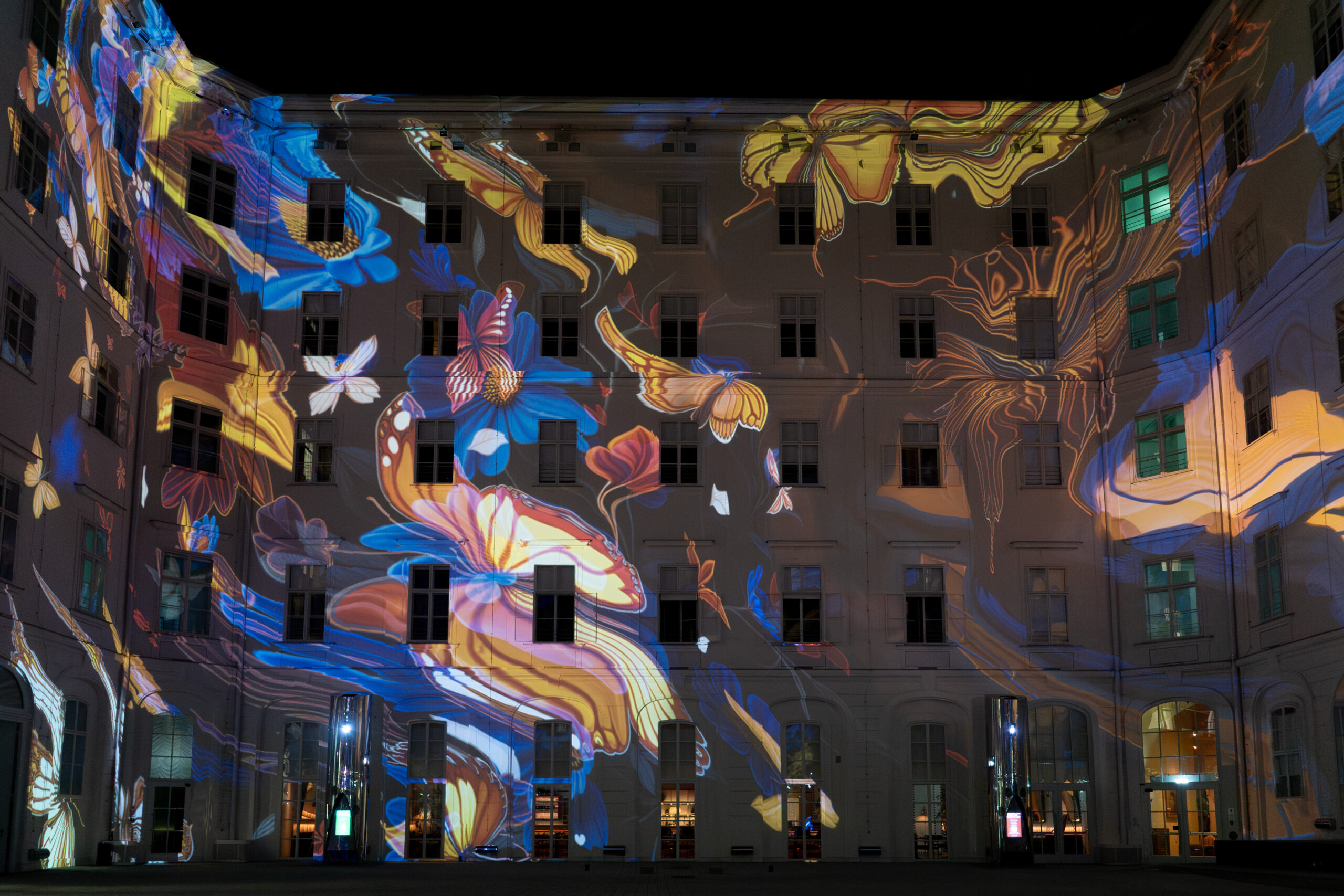
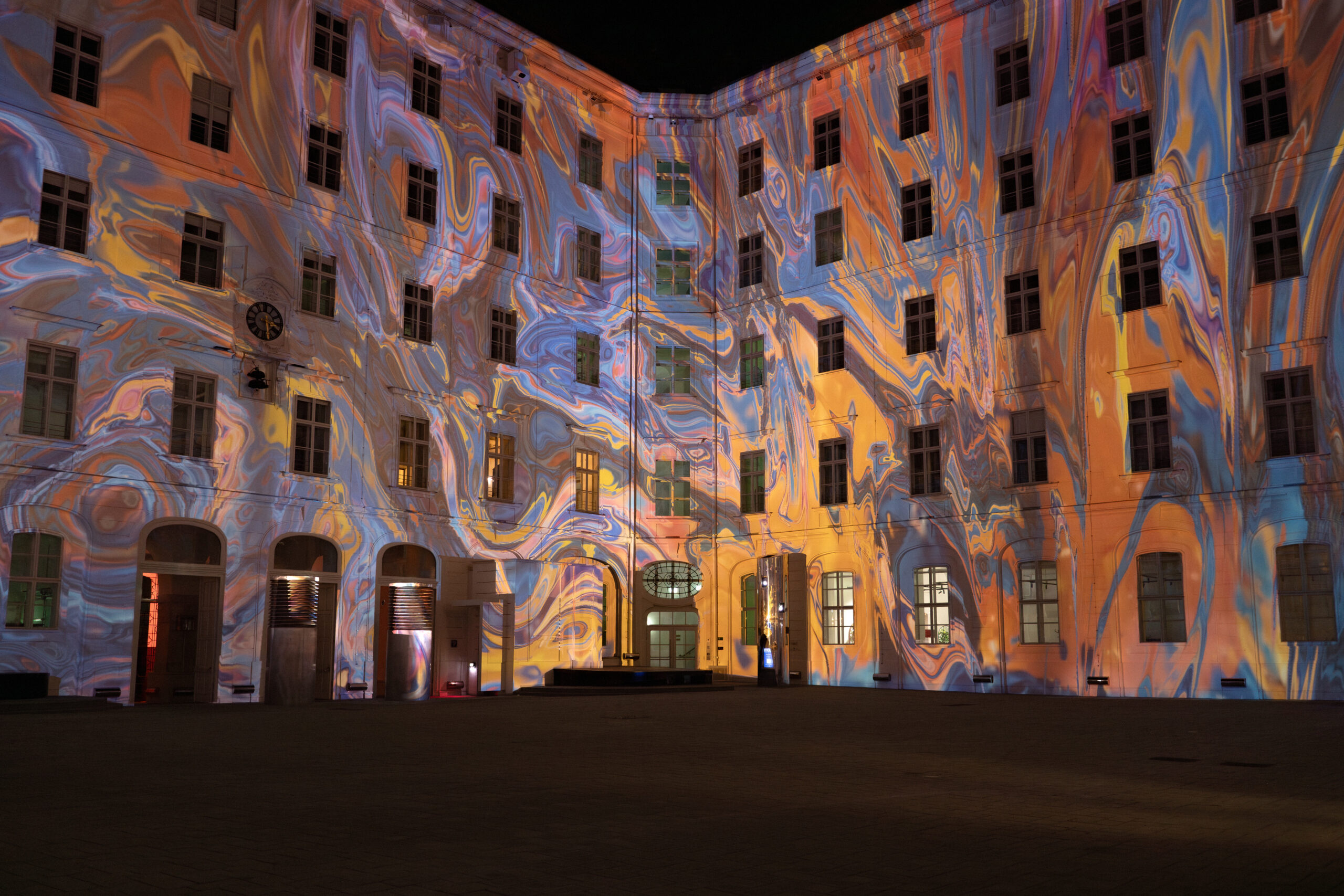
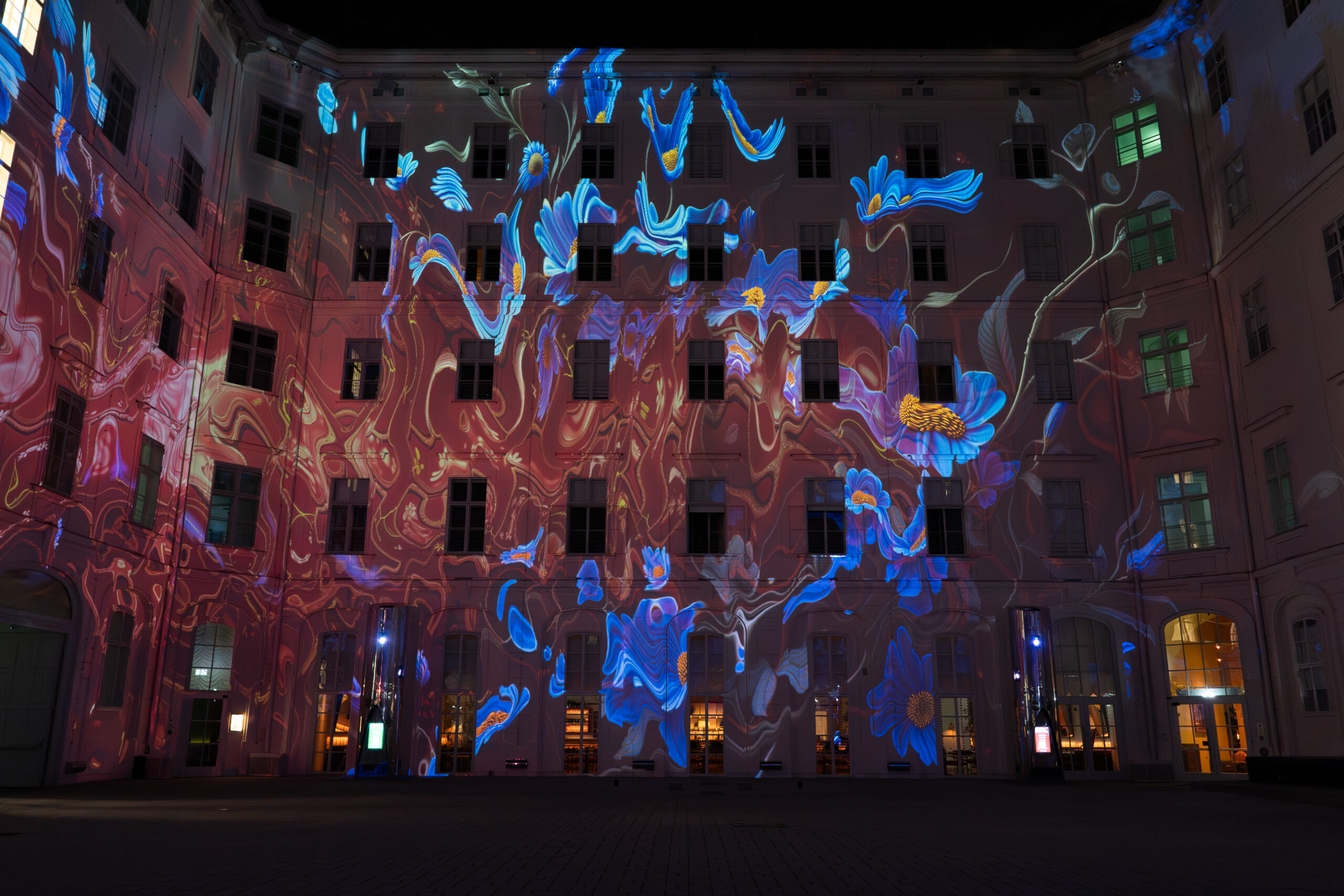
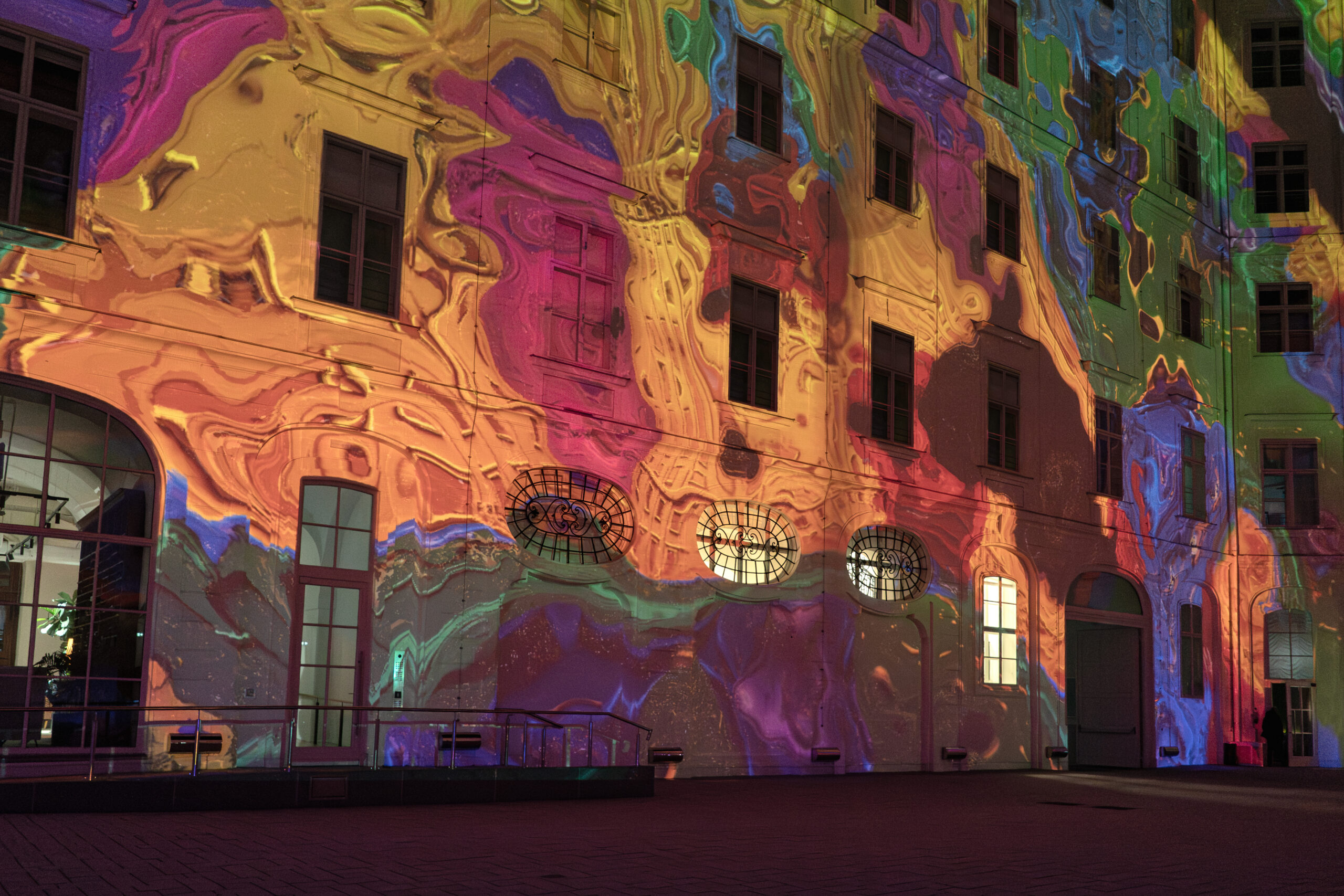
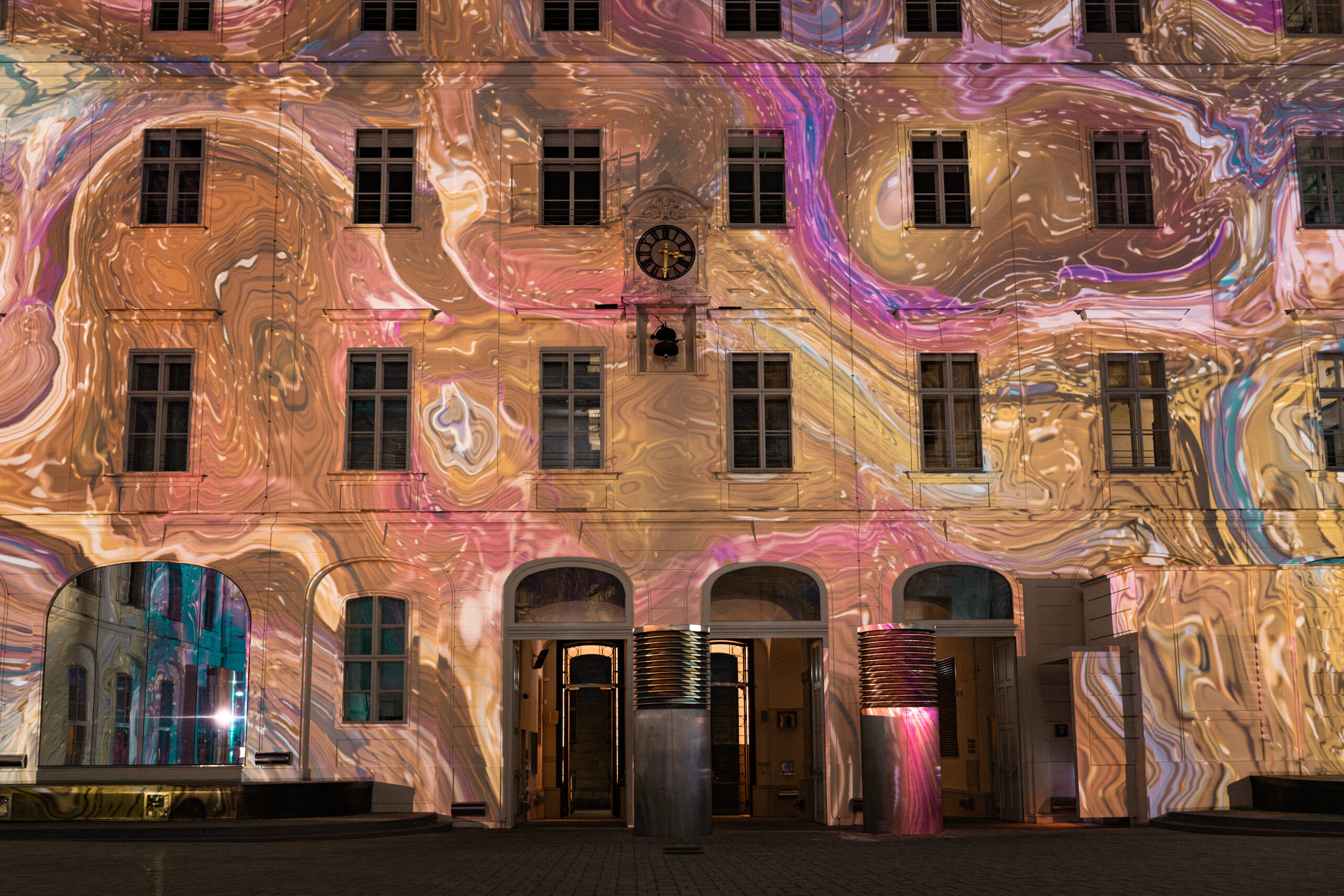
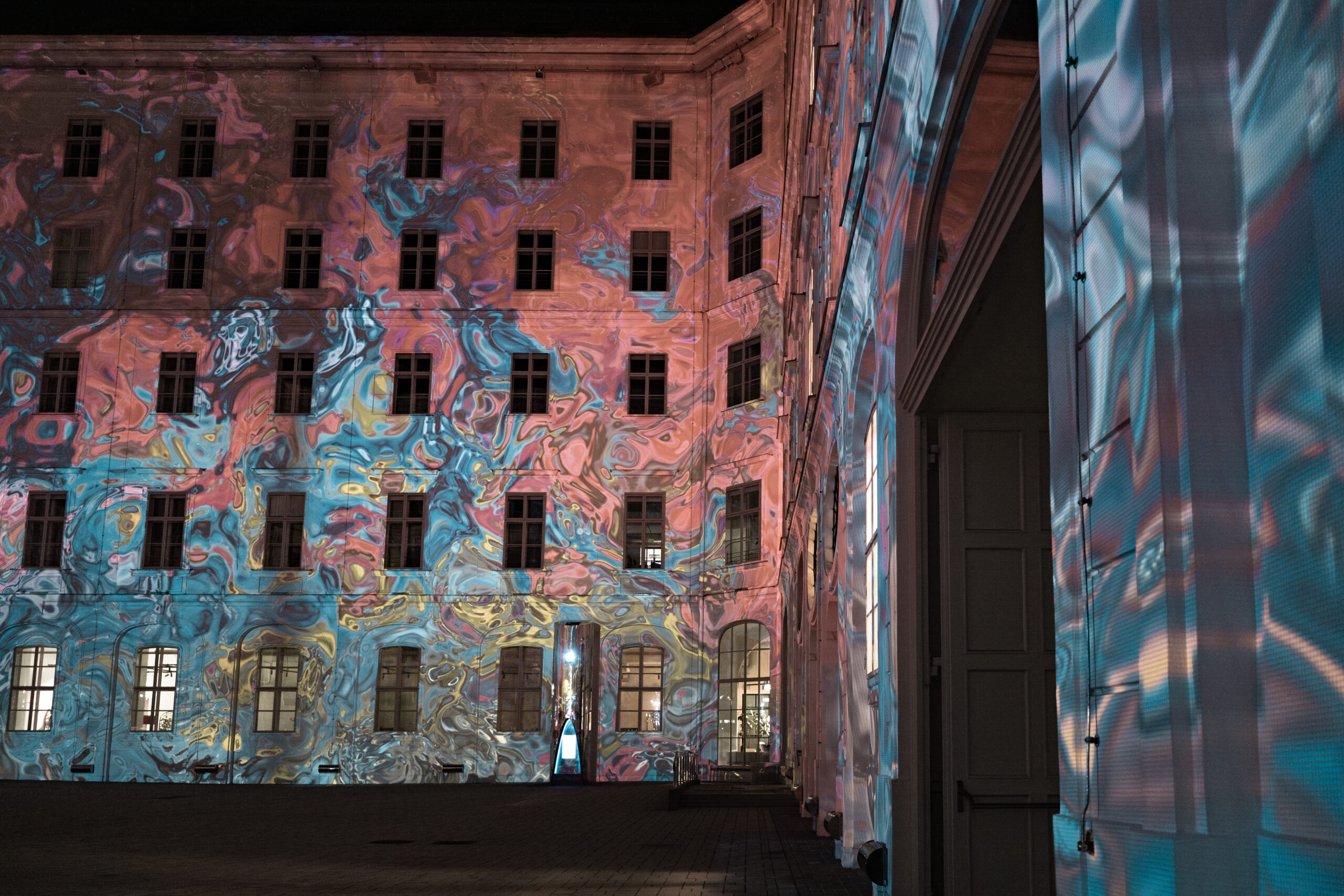
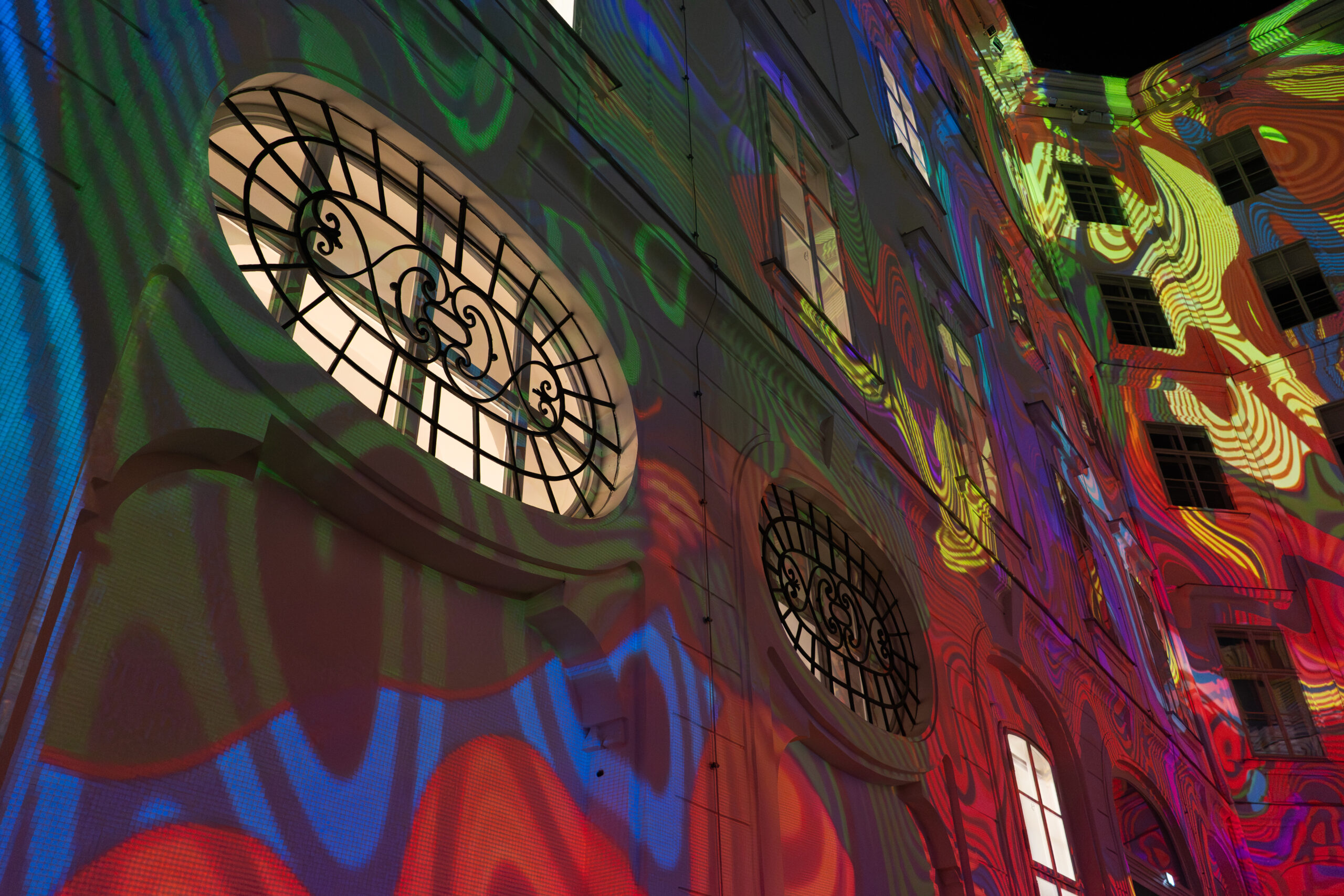
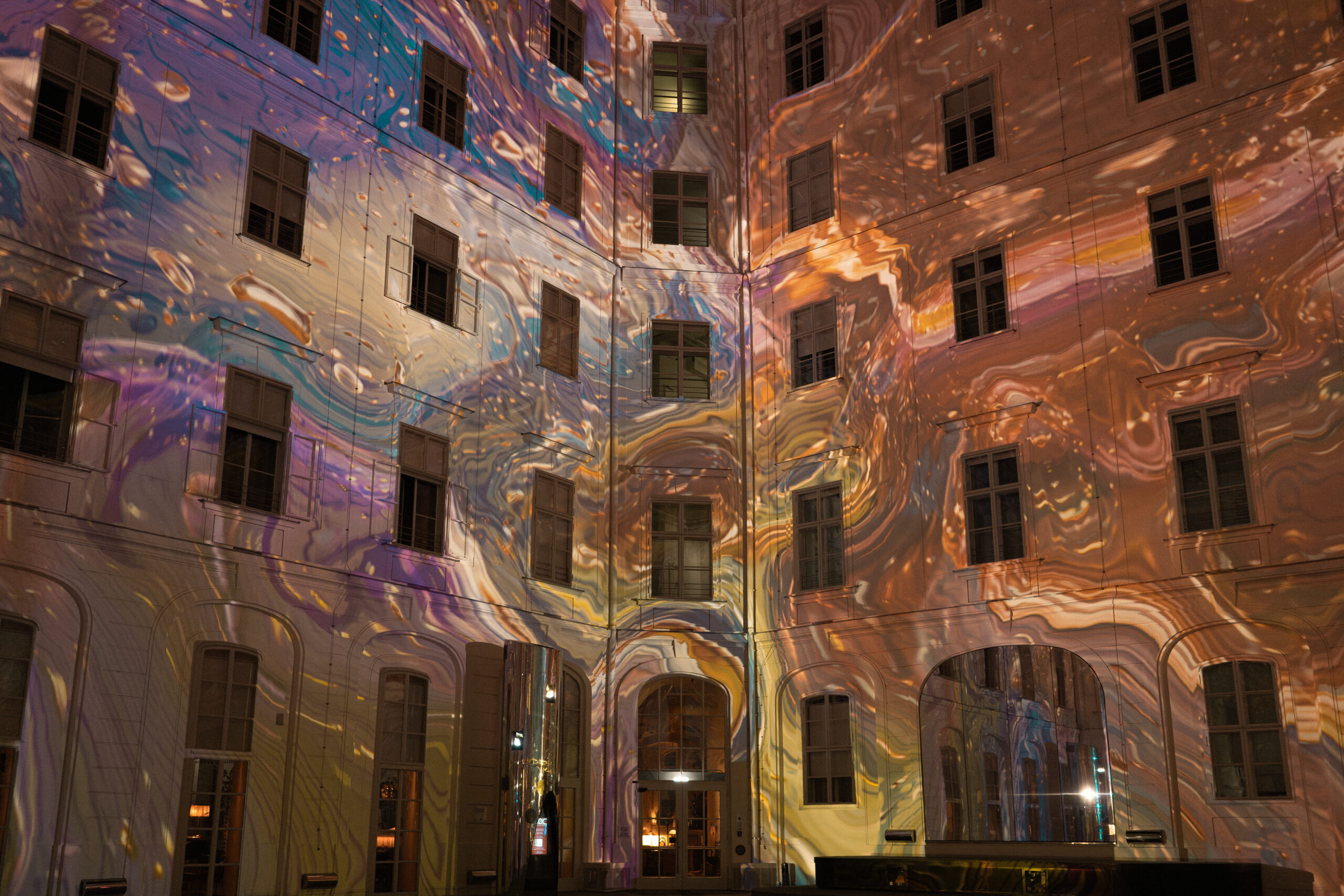
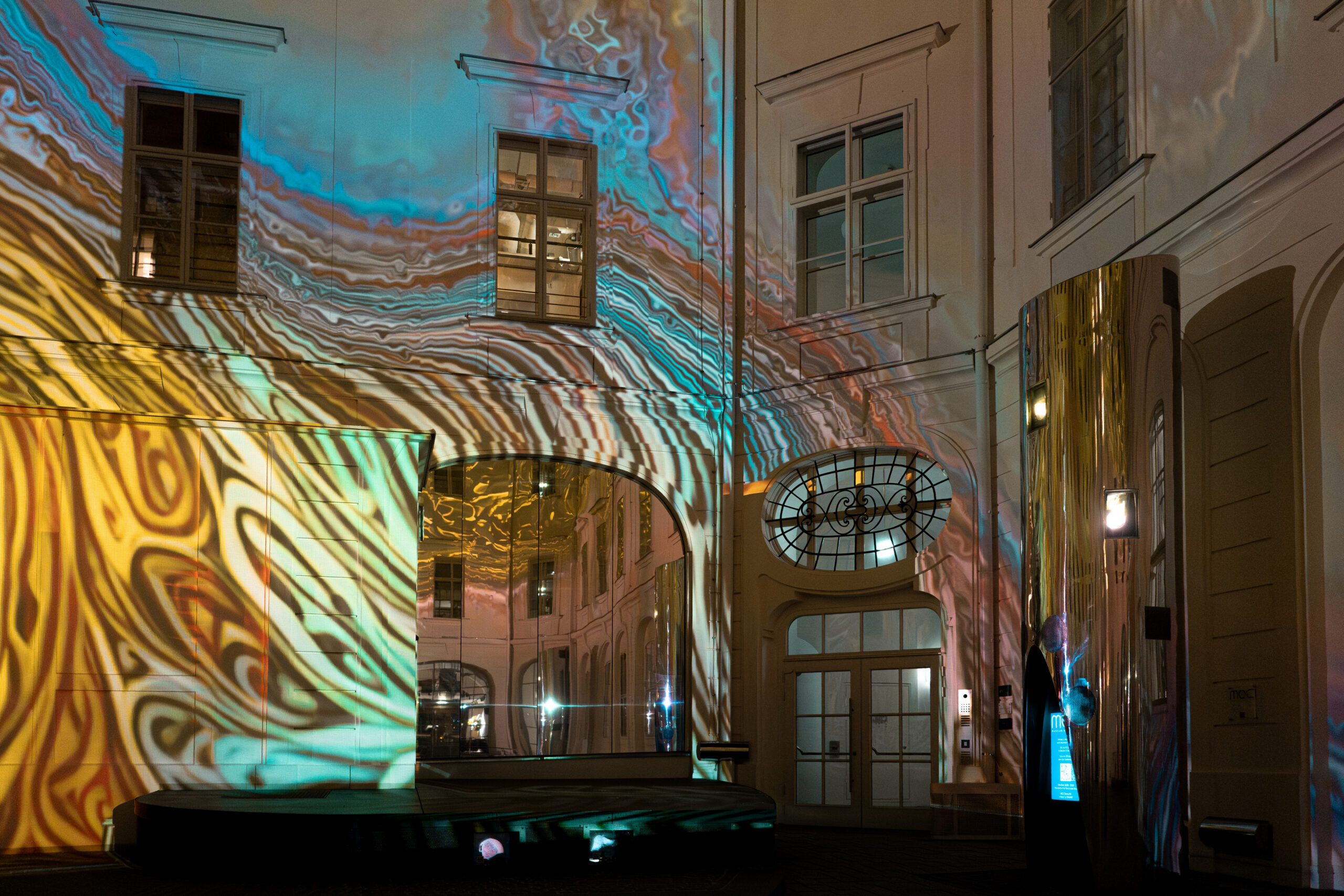
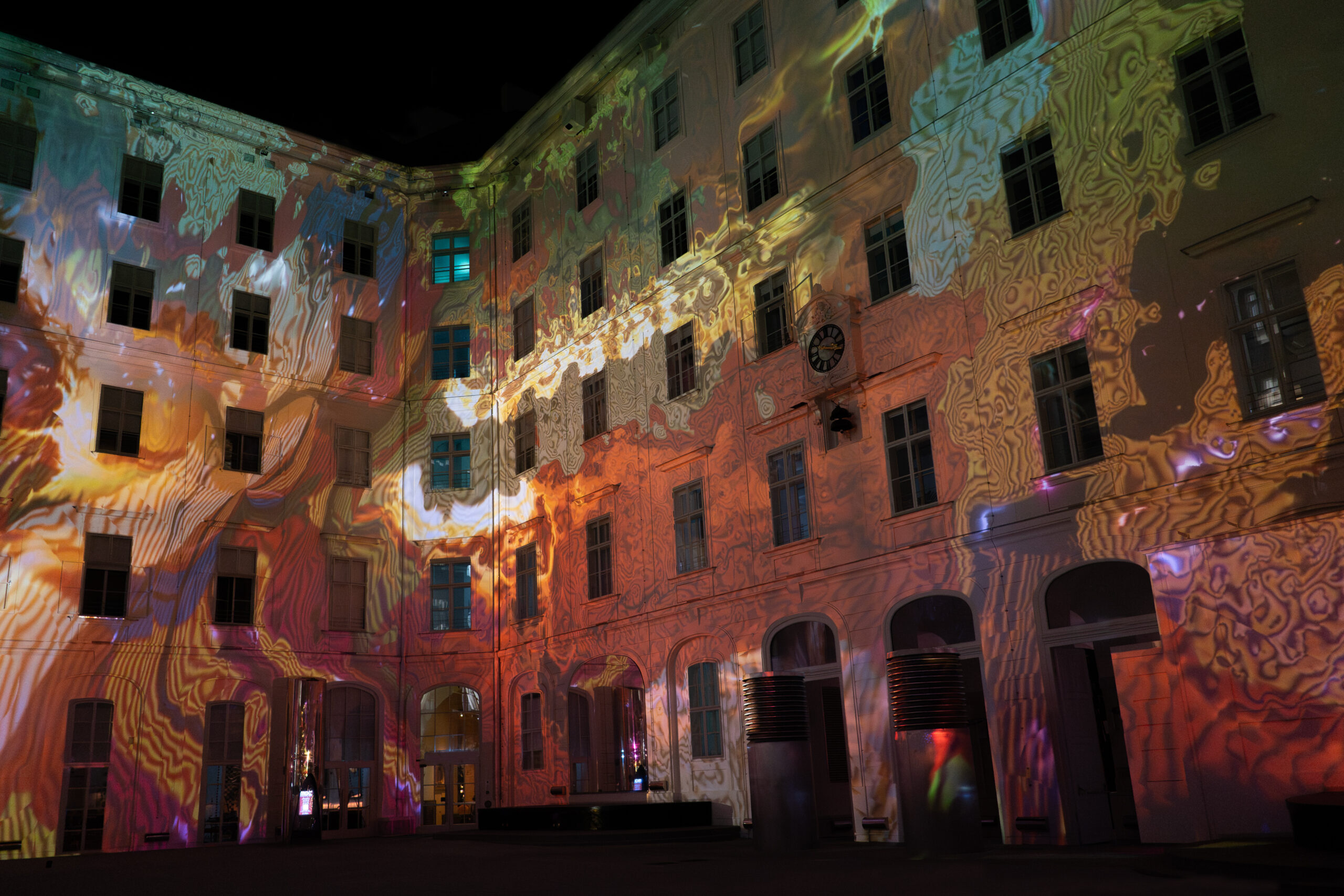
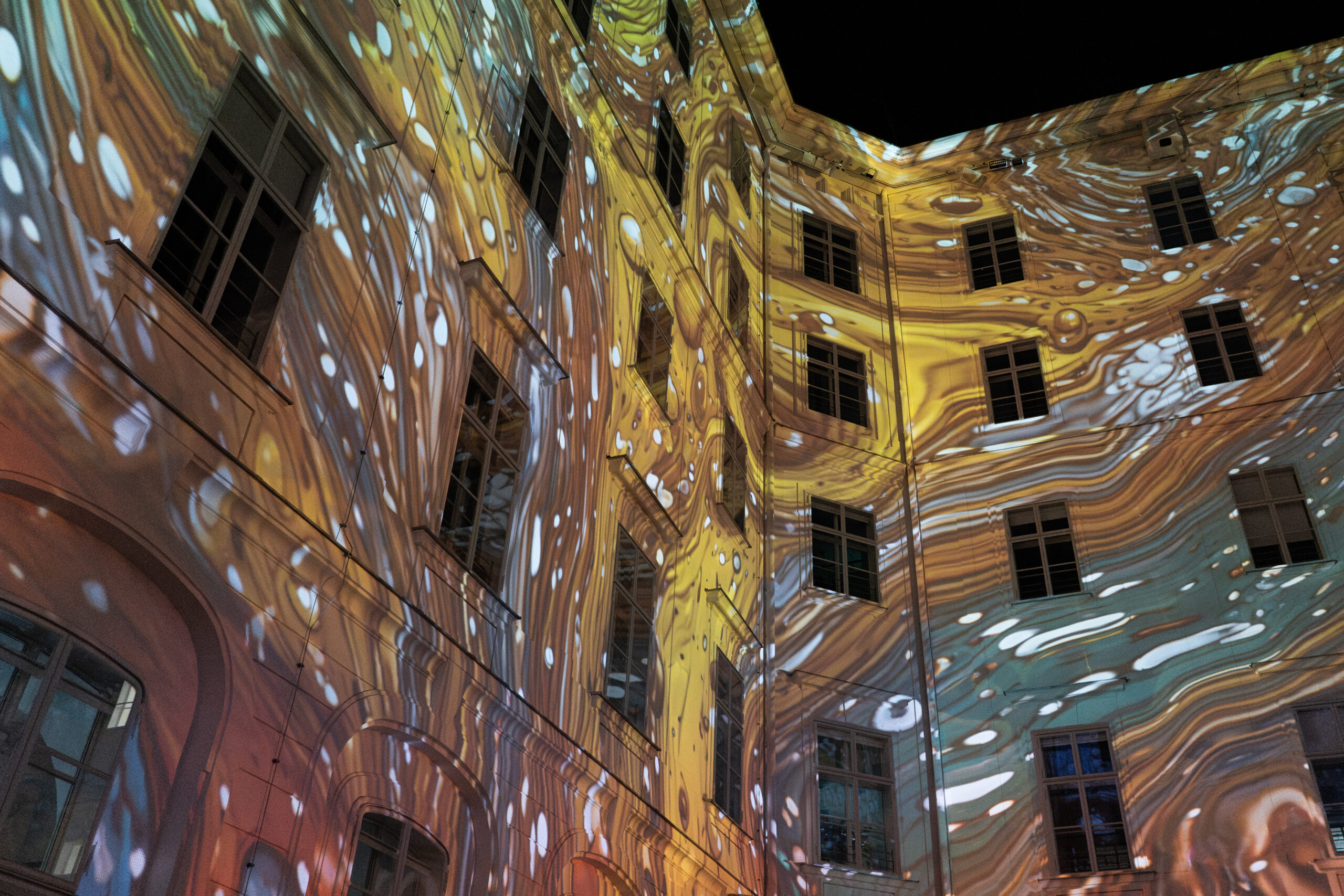
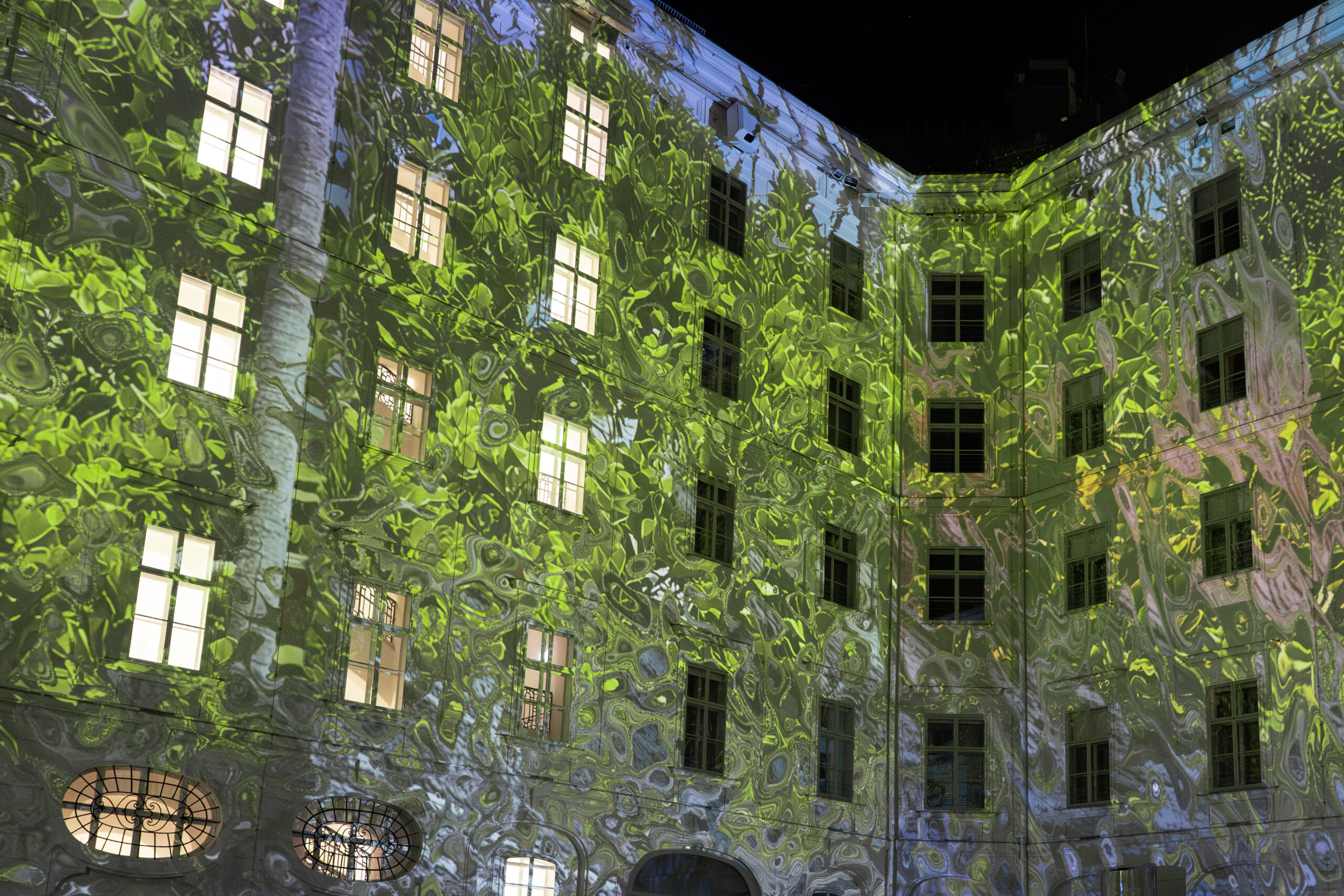
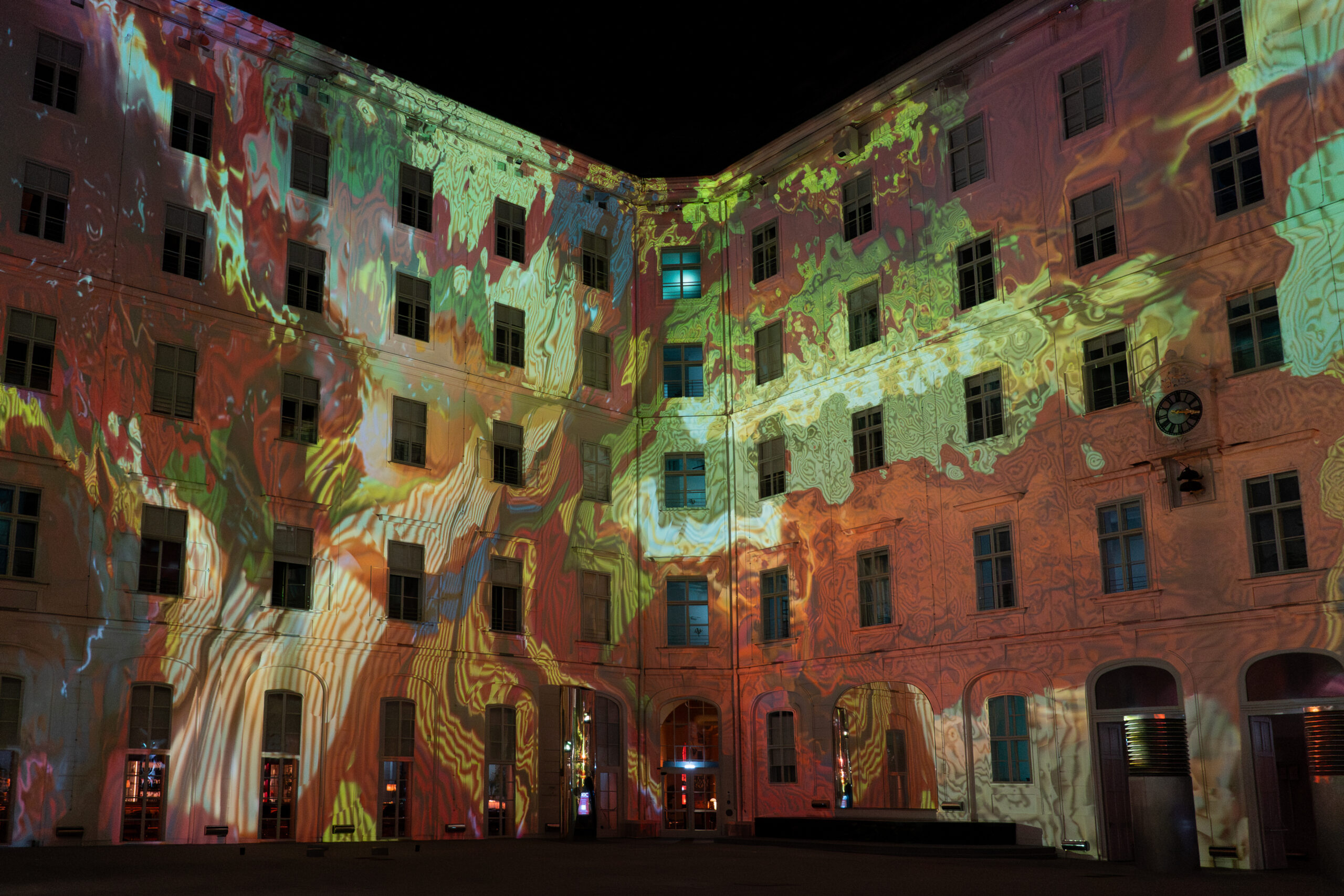
The Museum of Change is a permanent, cross-spatial media-art installation in the public space of the historic Alte Post in Vienna. Across four staged areas — the central courtyard with large-scale projection mapping on the heritage-protected façade, the entrée, the passage to the Fleischmarkt, and the separately controlled restaurant area — a continuously shifting audiovisual environment unfolds. Nothing repeats: the staging is composed in real time and is unique in every moment.
Image Generation - AI in Service of the Architecture
At the heart of the visual concept lies an archive of images created using generative AI. Unlike arbitrary image material, every motif was precisely tailored to the concrete architecture of the Alte Post — to the proportions, cornices, window axes, and materiality of the historic façade. As a result, the projected content doesn’t merge with the building as an overlay but reads it: it picks up the building’s geometry and turns the structure itself into the image carrier.
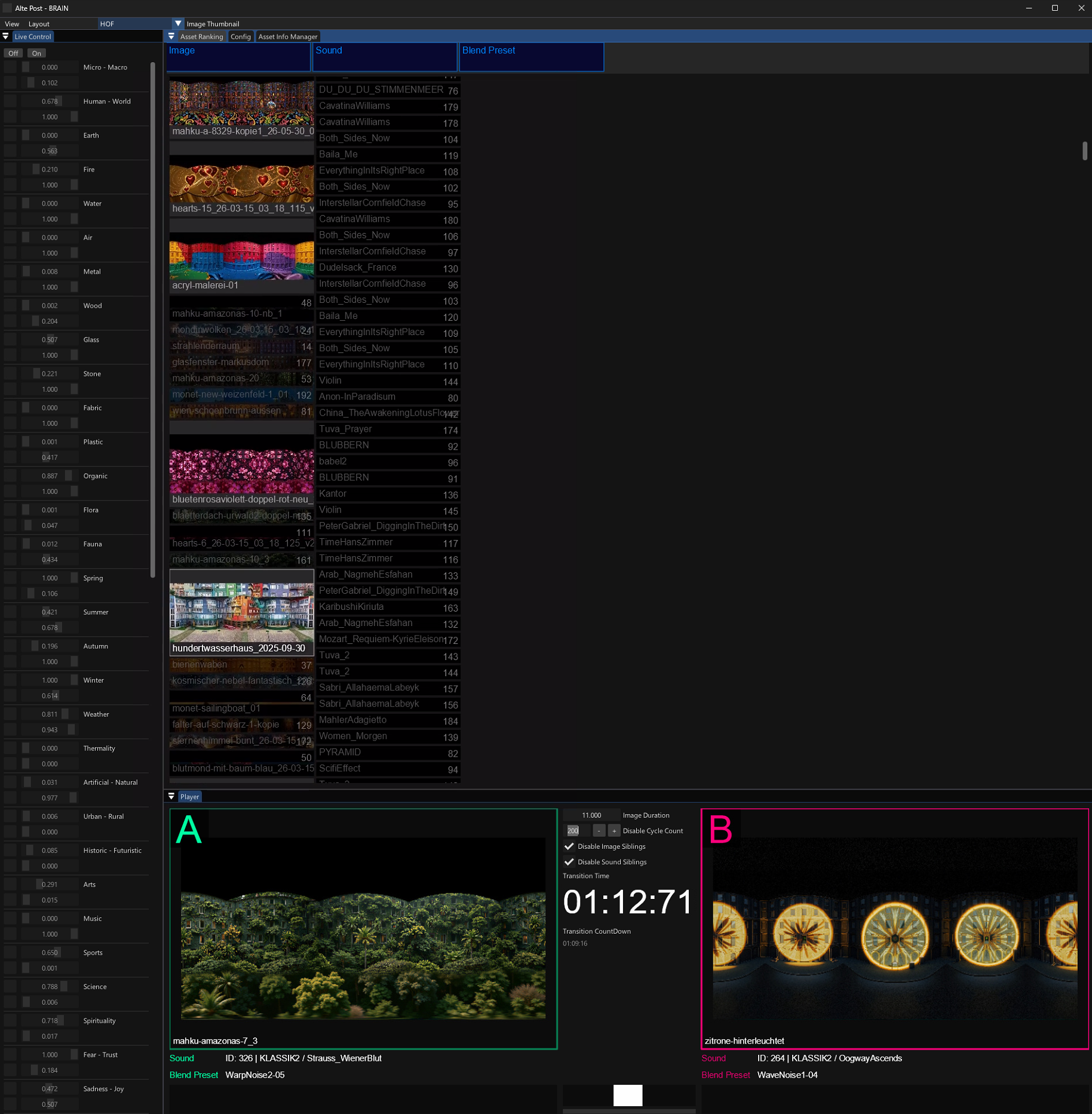
Each generated image then passes through a schematic classification process that characterizes it along roughly 40 parameters. These parameters span a multilayered semantic field — from temporal dimensions (historic ↔ futuristic) and materiality (metal, flora, wood, glass, stone) through elemental qualities (fire, water, air, earth) and scale (micro ↔ macro) to emotional axes (joy ↔ sadness, trust ↔ fear, skepticism ↔ awe). Each value is captured numerically and assigned a relevance weighting, so that every image is positioned as a precise point within a high-dimensional space of meaning.
A Shared Vocabulary for Image and Sound
The sounds we gathered in the same archive were classified according to exactly the same schema. Image and sound thus speak the same language: a motif and an acoustic texture can be related, contrasted, or driven in sync via their shared parameter values. This shared systematics gives rise to the close audiovisual interlocking of the installation.
BRAIN - Camposition in Real Time
The control software BRAIN is the compositional core. It stages the environment by continuously driving the roughly 40 parameters — partly along a curated narrative timeline with set keyframes, partly through algorithmically generated parameter values. From this interplay of authorship and generative logic, BRAIN selects matching images and sounds from the archive and continuously blends between them: two images are held in parallel and organically morphed and abstracted into one another via purpose-built noise algorithms. Light, lasers, haze, and multichannel sound are all derived synchronously from the same parameters — a unified compositional gesture across every medium.
To map the façade projection seamlessly and stably onto the complex architecture across more than 40 projectors, we developed our own projector calibration software in vvvv gamma. It orchestrates the entire projector array, measures and warps the projection surfaces, and unifies all devices into a common coordinate system — the foundation that lets the AI-generated images sit pixel-accurately on the architecture.